
Time and operating state
Note whether the nuisance appears with an appliance, heating cycle, open window or neighbouring door in use.
QUIET DETAILS, SECURE FITTINGS · CRANFORD
A sticking door, rattling cupboard or loose blind can become especially noticeable in a room used for sleep, study or shift recovery. Diagnose the movement and record the quiet-room priorities before fitting a quick replacement.
VILLAGE FABRIC AND MODERN ROUTES
Hounslow publishes a Cranford Village Conservation Area appraisal and places Cranford with Heston in its borough character and design guidance. The area also sits close to major west-London transport infrastructure. Those facts do not make every house historic or every sound an external problem. They do make address-specific checks important before changing visible windows, doors or other external features.
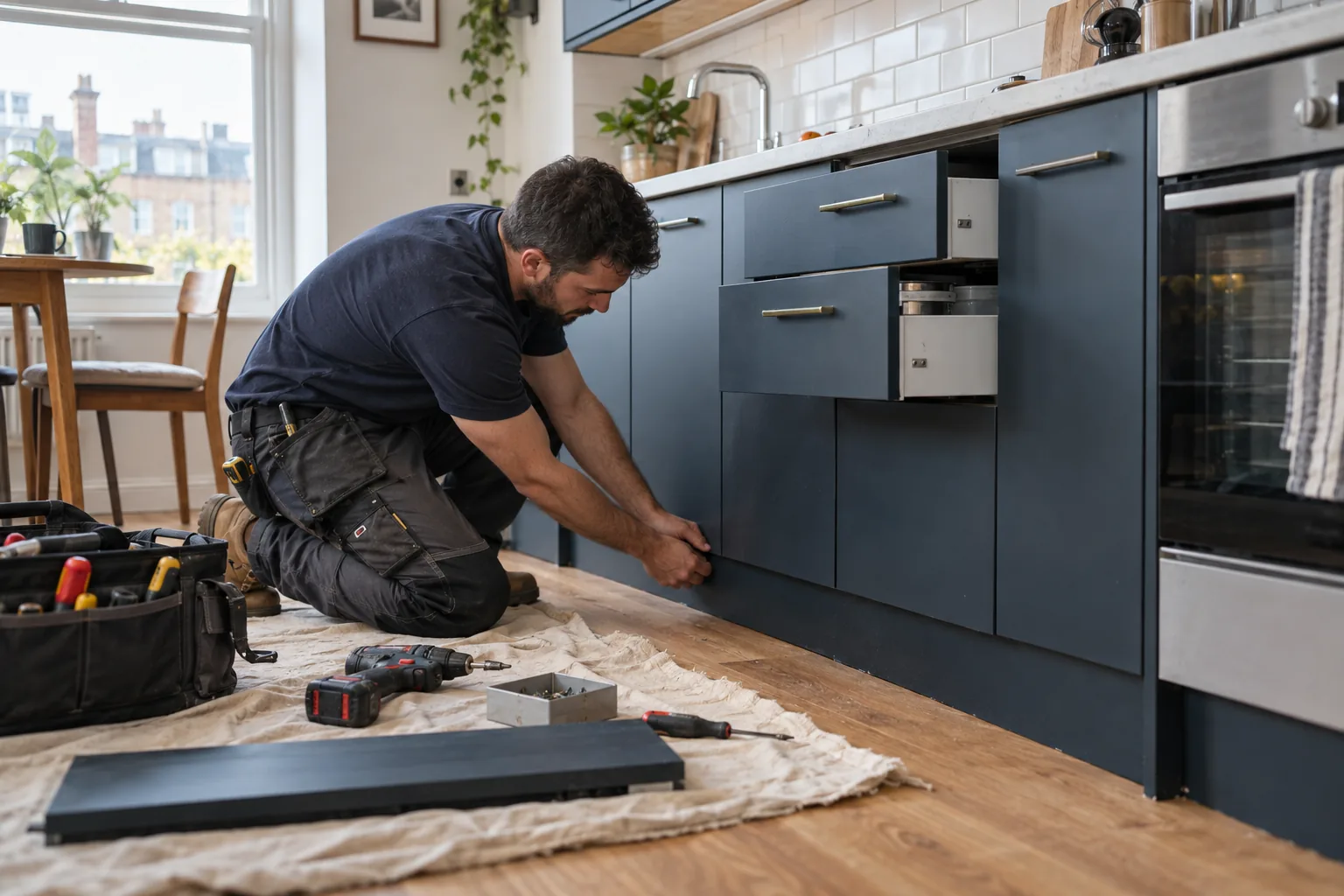
Inside, record when a rattle occurs. Does a cupboard vibrate only when the washing machine spins, does a latch chatter when another door closes, or does a blind strike the frame in moving air? A short video and a wide photograph are more useful than a description of ‘noise’. Bob’s can assess ordinary adjustments and fittings while separating damaged mechanisms, glazing, specialist acoustic work and consent-led alterations.
MAKE A SOUND-AND-MOVEMENT LOG
Do not silence a symptom by wedging the nearest gap. A repeatable observation helps locate the component that has actually moved or worn.
Note whether the nuisance appears with an appliance, heating cycle, open window or neighbouring door in use.
Apply light pressure to one safe component at a time and record which contact stops the rattle. Do not dismantle covers or electrical equipment.
Photograph hinges, catches, runners and missing buffers. Include a ruler where a replacement part may be needed.
Fill the cupboard or rail as normally used and operate it again. Weight can expose movement hidden by an empty test.
Rank faults by their effect on sleep, calls or study. This keeps the appointment focused if investigation takes longer than expected.
CLOSURE BEFORE CUSHIONING
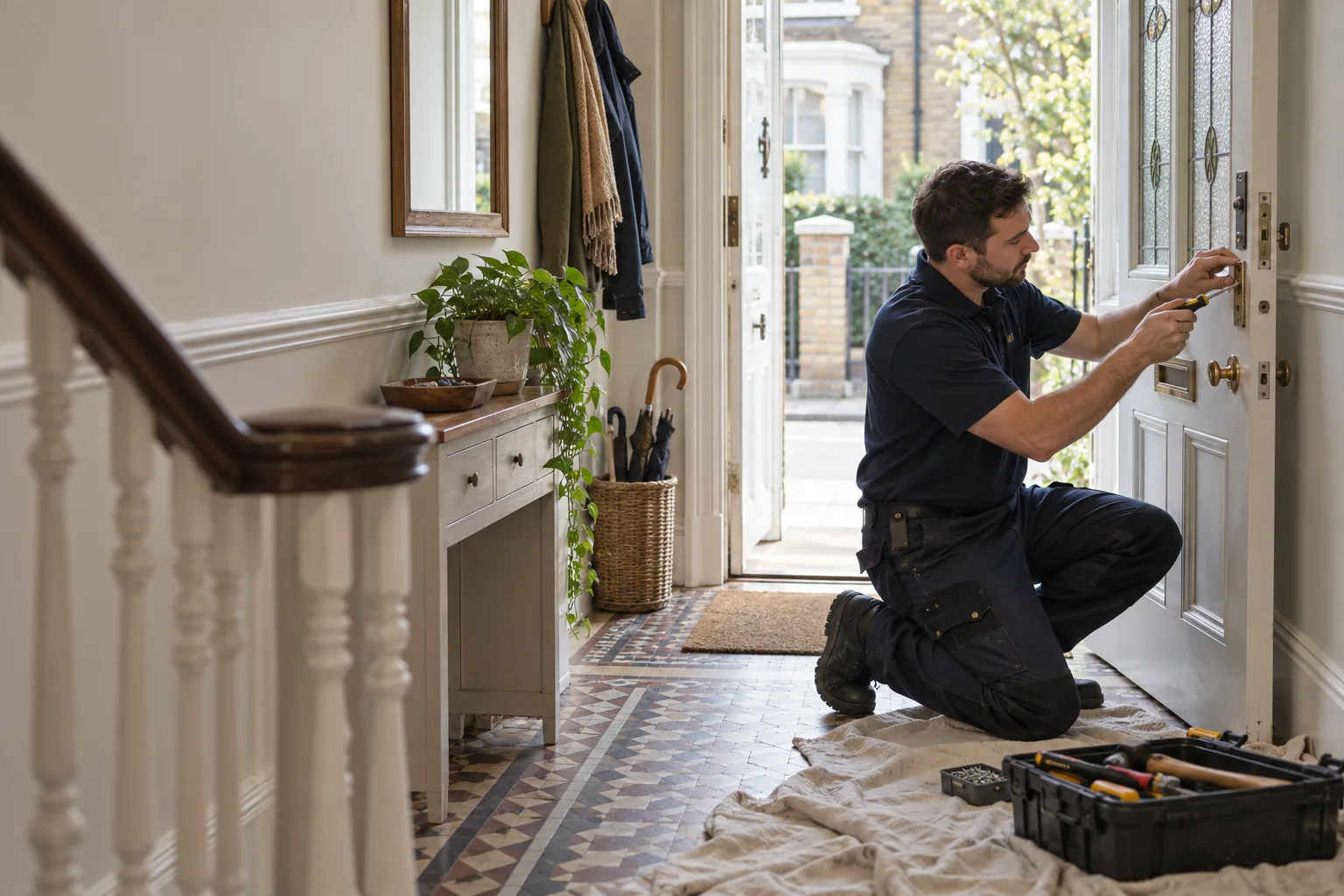
Inspect hinge security, edge clearances, latch alignment and the condition of the stops. A thick self-adhesive strip can make a door harder to latch, place new strain on hardware or interfere with a fire-door arrangement. Identify the door type and its required function before adding any product.
For an ordinary internal door, reproduce the sticking point with the room in its normal temperature and use. Mark fresh rub lines with removable pencil and check whether the frame or leaf has moved. If there is decay, a failed closer, cracked glazing or a suspected fire-safety issue, pause the handyman adjustment and obtain appropriate advice.
A QUIET-ROOM WORKFLOW
Record the exact sound, action and room conditions before moving hardware.
Check hinges, catches, buffers, loads and adjacent surfaces as one mechanism.
Adjust or replace the confirmed component without masking unrelated movement.
Use the same appliance, door action or loaded cupboard and compare the result.
ESTIMATE INVESTIGATION AND ADJUSTMENT
Choose the closest task, quantity and expected duration. The calculation uses Bob’s published weekday labour rates; replacement mechanisms, seals, blinds, parking and specialist acoustic or fire-door work are assessed separately.
KEEP THE ORIGINAL TEST
Save the short before-and-after recordings with the date, room condition and hardware reference. Repeat the test after the cupboard is reloaded or the room returns to its normal temperature. A repair that works only when the furniture is empty has not addressed ordinary use.
Avoid adding pads, wedges or lubricant without noting where and why. Loose improvised pieces can fall into moving parts and excessive lubricant attracts dust or marks finishes. If the sound returns, the record shows whether the same component moved again or a different contact developed.
The same load and action are used for the final test.
Hinge, buffer, catch and blind references stay with the room notes.
A later fault can be compared with a dated alignment photograph.
NEARBY COVERAGE
Prepared household repairs north of Cranford.
Measured fitting and maintenance across the borough.
Practical handyman support west of Cranford.
CRANFORD ADJUSTMENT QUESTIONS
A video can show timing and sound, but the mechanism and fixing background still need inspection. Include the complete object and the action that triggers it.
Not before checking hinges, latch alignment, clearances and the door’s function. An unsuitable seal can prevent proper closure or create strain elsewhere.
The load should be documented, then contents may need controlled removal for safe access. The final alignment is tested again under normal load.
No. Check Hounslow’s current map and the property’s status before altering an external feature. Internal work may still need landlord or lease approval.
Allow for reproducing the fault, inspecting connected parts, adjustment and the comparison test. Materials and unexpected damage are outside the simple labour estimate.
Send the full window, blind type, width, control side, handle position and a video in the condition that produces contact.
CAPTURE THE FAULT IN ACTION
Send one wide photograph, a short recording and the time or action that triggers each nuisance. Add product references and any property controls. Bob’s can group suitable adjustments while identifying glazing, fire safety, structural or specialist sound work that needs another route.