
Reproduce ordinary use
Record the exact movement, direction and room condition that creates the sound.
DOOR RATTLE · DRAWER CLOSE · FURNITURE CONTACT
A click, knock or scrape may come from alignment, loose hardware or furniture touching a surface. Bob’s can assess suitable ordinary adjustments once the source, building responsibility and protected fabric are understood.
A CONSERVATION CONTEXT WITH ACTIVE STREETS
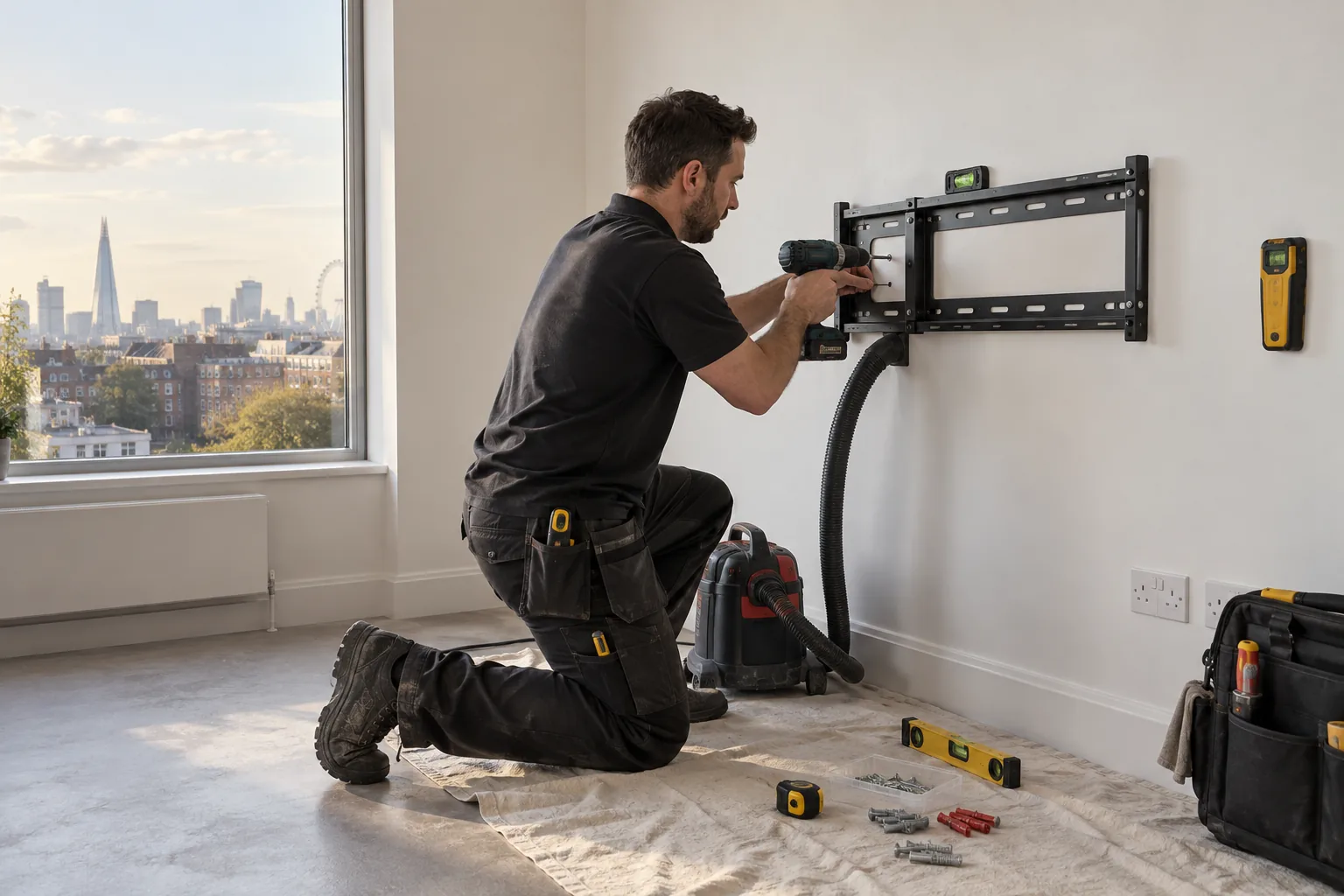
Islington lists Clerkenwell Green as Conservation Area CA1 and publishes adopted design guidance. The council’s Clerkenwell Green project also records works intended to create a greener public space with fewer cars around the Green. Those official records underline two practical checks: establish the status of the exact building before touching significant fabric, and plan deliveries without assuming kerbside access beside the door.
Inside a flat or mixed-use building, record reception procedures, lift limits, permitted work hours and the private boundary. Photograph decorative surfaces before fixing. Bob’s can complete suitable furniture assembly, hanging and ordinary adjustments once permission, support and access are clear; communal systems and protected fabric need their responsible route.
CHANGE ONE VARIABLE AT A TIME
Record the exact movement, direction and room condition that creates the sound.
Operate one hinge, catch, drawer or furniture foot without adding unrelated temporary pads.
Use the manufacturer method or an appropriate ordinary repair within the agreed private scope.
Run complete opening, closing and loaded movement, then inspect neighbouring clearances.
DESCRIBE THE SOUND PRECISELY
A useful record avoids calling every unwanted sound a loose hinge.
Note whether a catch, handle, drawer stop or movable component creates it at one position.
Record vibration, operating speed and whether pressure on one part changes the symptom.
Inspect contact marks and changing gaps before trimming or covering anything.
Do not promise a pad or adjustment will solve sound transmitted through shared structure or services.
ORDINARY-ADJUSTMENT LABOUR GUIDE
The calculator applies Bob’s published weekday labour rates. It excludes products, materials, parking, access fees, acoustic testing, fire doors, communal assets and fixed building services.
USE A SHORT SOUND LOG
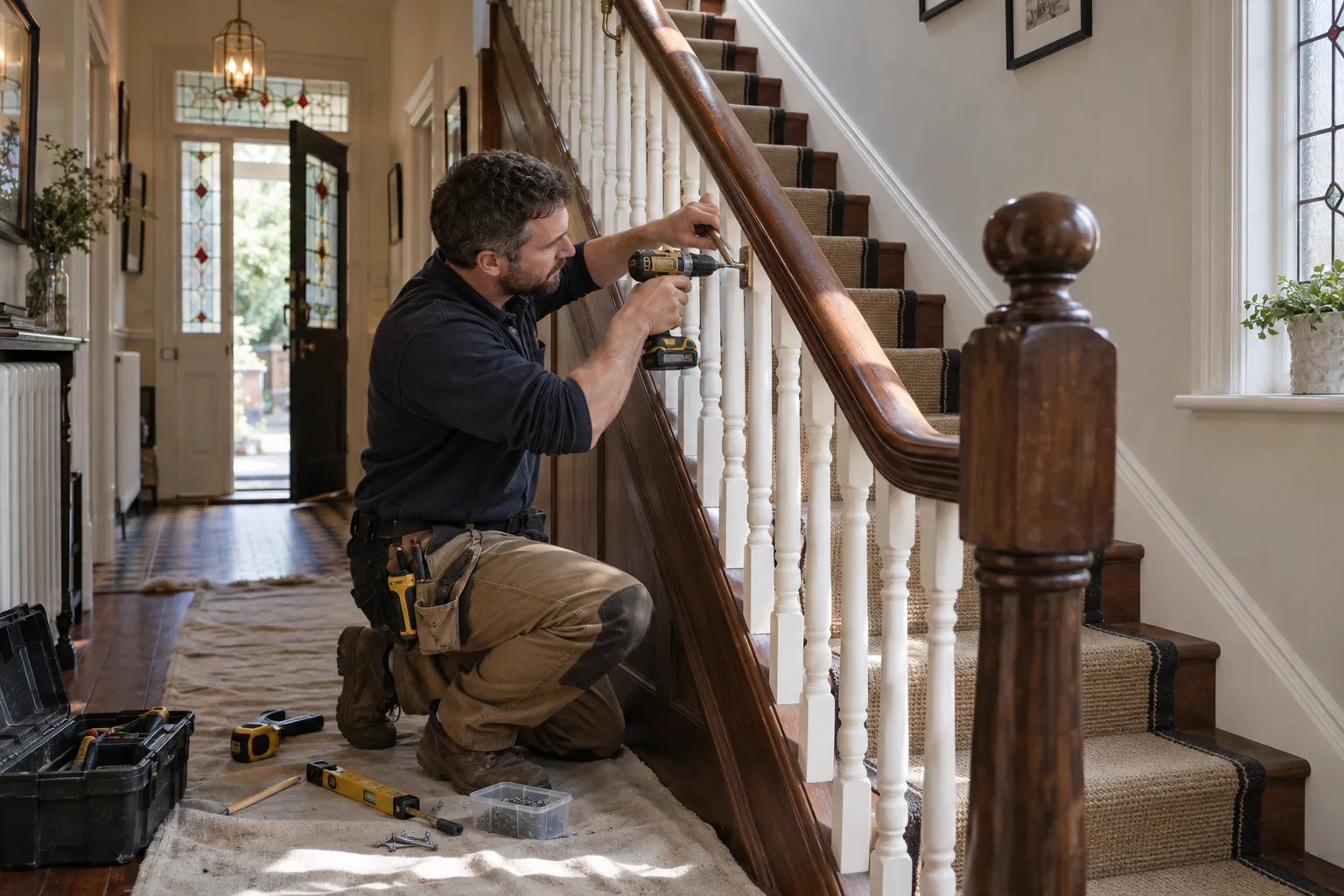
Write the room, item, movement and time each sound occurs. A cabinet rattle that appears only when a nearby appliance runs presents a different question from a drawer that knocks at the end of every close. Make a short video where privacy and building rules permit, but pair it with a written description because recordings can distort volume. Do not remove covers or investigate fixed services to chase an uncertain noise.
Inspect visible screws, buffers, catches, feet and clearances with the item unloaded. Check product instructions before adding adhesive pads or changing hinge settings. A pad can hide contact temporarily while creating a new alignment problem elsewhere. Fire doors, entrance doors, ventilation plant and building systems require their responsible competent route. The completed ordinary adjustment should be tested at normal speed, slowly, and with the usual safe load.
DO NOT CONFUSE QUIET CLOSING WITH SOUNDPROOFING
A drawer stop, loose handle or furniture foot has a visible movement that can be reproduced.
Conversation or music passing through walls needs acoustic assessment, not an improvised strip.
Fire, entrance and ventilation components are never modified simply to make them feel quieter.
NEARBY COVERAGE
Prepared central-London visits nearby.
Managed-building work to the east.
See coverage to the west.
CLERKENWELL INTERIOR-NOISE FAQ
It may be a managed fire-safety asset. Report it to the building manager and use the competent route they specify.
No. They may soften direct furniture contact on a compatible surface, but they do not provide tested acoustic separation.
Record the item, movement, time, room condition and whether light pressure changes the symptom, without dismantling fixed equipment.
First check alignment, runners, load and manufacturer adjustment. Removing material without diagnosis can worsen the fit.
Send a short video where appropriate, item photographs, product information, the private or communal boundary and building access rules.
Operate the item slowly and normally with its usual safe load, then inspect gaps, stops, fasteners and adjacent contact points.
MAP EVERY BUFFER AND STOP
Photograph each fitted buffer, foot or stop in context and note its product, material and intended contact surface. Keep spares in a labelled bag rather than substituting a thicker pad later. Check adhesive products after the stated settling period and remove them if they creep, mark a delicate finish or alter door and drawer alignment. A missing bumper may indicate a repeated impact rather than simple wear, so inspect the movement before replacement. Review the register when furniture moves because the old contact points may no longer protect anything. This modest record prevents quiet-close details becoming an unexplained collection of patches.
RECORD THE MOVEMENT THAT MAKES THE SOUND
Include product information, a short sound log and access rules. Bob’s can assess suitable ordinary adjustments without presenting them as acoustic construction.