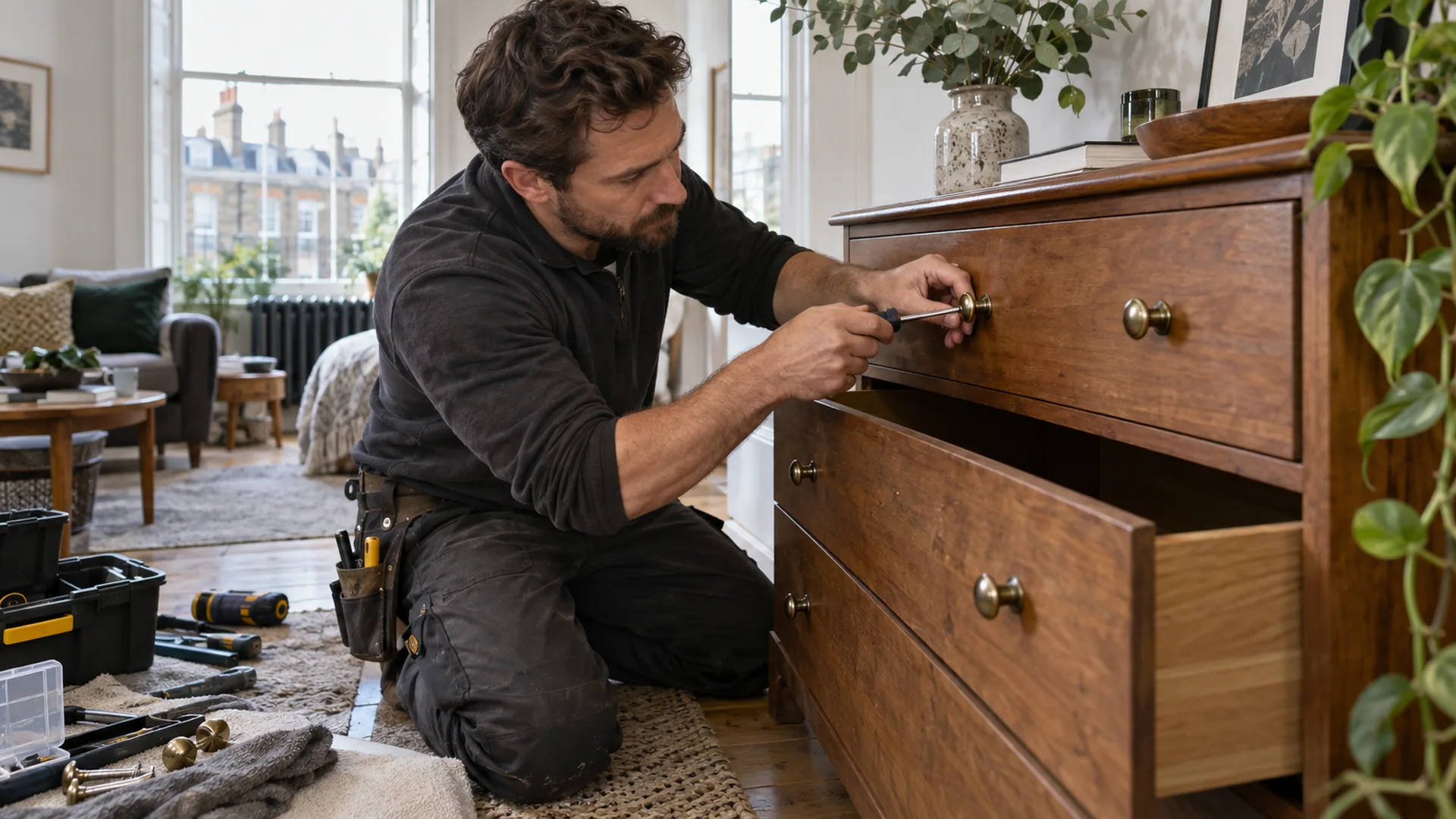
A photograph of a closed chest can miss the reason the room is awkward. The drawer may open, yet leave no comfortable place to stand and remove its contents. Explain that ordinary use without forcing the furniture or moving a heavy item simply to create a demonstration.
For a repair request, keep the intended result realistic. Restoring a runner may improve movement, but it does not shorten the drawer or alter the bed beside it. If the layout is the limiting factor, discuss that honestly before paying for a component change that cannot address it.
Other room details deserve the same distinction. A doorstop protects a contact point; it does not correct every door-alignment fault. A relocated mirror changes its position; it does not make an unsuitable wall capable of carrying it. The work should answer the observed problem rather than merely add another fitting.
During the visit, the household may need access to belongings in a different part of the room. Agree that before the work area is prepared. Keep essentials outside the immediate working space where practical, without shifting them into the route needed for tools or creating another obstruction.
At handback, understand what has changed. The repaired drawer or door should be reviewed within the agreed ordinary use, with any outstanding layout issue identified separately. Do not treat a smoothly moving component as confirmation that the whole room has been redesigned or that existing furniture has a new load capacity.