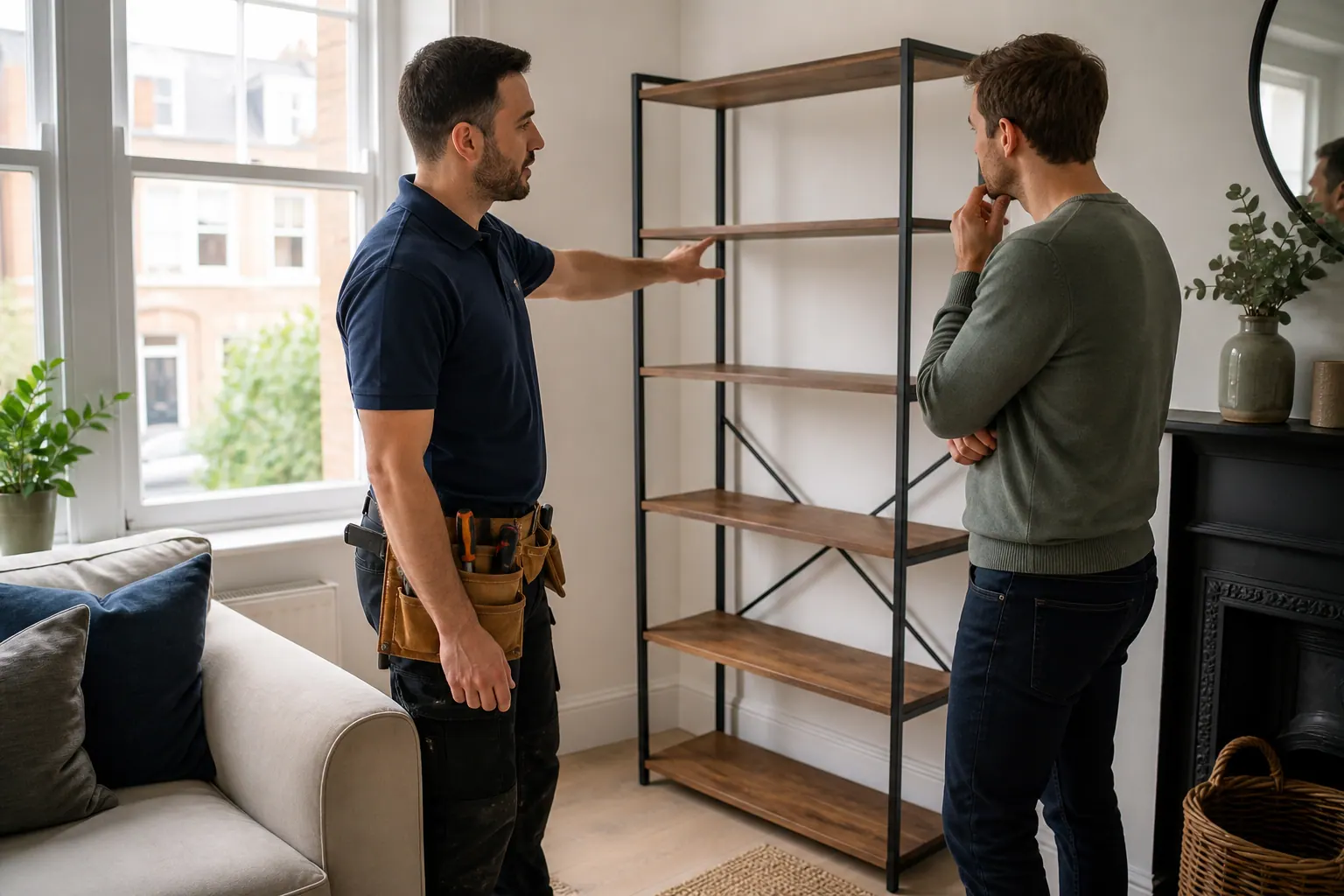

Each job begins with a clear review of what needs to be completed and how the surrounding area is structured. In initial site condition analysis systems, attention is given to understanding the specific requirement, the current setup, and any physical limitations that may affect access or installation.
This stage also includes checking how existing fixtures interact with the area where work will take place. In surrounding structure evaluation processes, nearby fittings, wall conditions, and fixed elements are reviewed to ensure the planned work can be completed without causing imbalance or unnecessary strain on connected components.
Before any tools are used, a step-by-step plan is established. In structured execution planning systems, the work is broken into clear stages so each part is completed in a controlled and predictable order, reducing the chance of misalignment or incomplete fitting.
Preparation of the working environment is carried out before physical installation or repair begins. In site readiness preparation frameworks, the surrounding space is organised to allow safe movement, stable positioning, and uninterrupted access to the working zone.
During the process, each stage is checked as it progresses. In incremental installation monitoring systems, ongoing checks are performed to ensure that positioning, alignment, and functional fit remain correct throughout the job rather than only at the end.
If adjustments are required, they are made immediately within the workflow. In live correction adjustment systems, small variations in fit or alignment are corrected on-site to maintain consistency and avoid future operational issues.
Where multiple components are involved, coordination between parts is carefully managed. In multi-component integration systems, attention is given to how each element interacts with surrounding fittings to ensure the final setup functions as a complete unit.
Once the main task is completed, operational testing is carried out under normal conditions. In functional response evaluation systems, installed or repaired elements are checked for smooth operation, stability, and correct interaction with connected fixtures.
A final review is then completed across the full work area. In end-stage quality confirmation frameworks, the focus is placed on finish quality, secure fitting, and overall reliability to ensure the installation or repair meets expected functional standards before completion.