
Is sanding right for your floor?
Solid boards and many engineered floors can often be refreshed, but the wear layer, board stability and old coatings matter.
TIMBER FLOOR RESTORATION
Bring tired wooden floors back into useful, attractive condition with a carefully planned sanding and finishing service for London homes, rentals and workplaces.
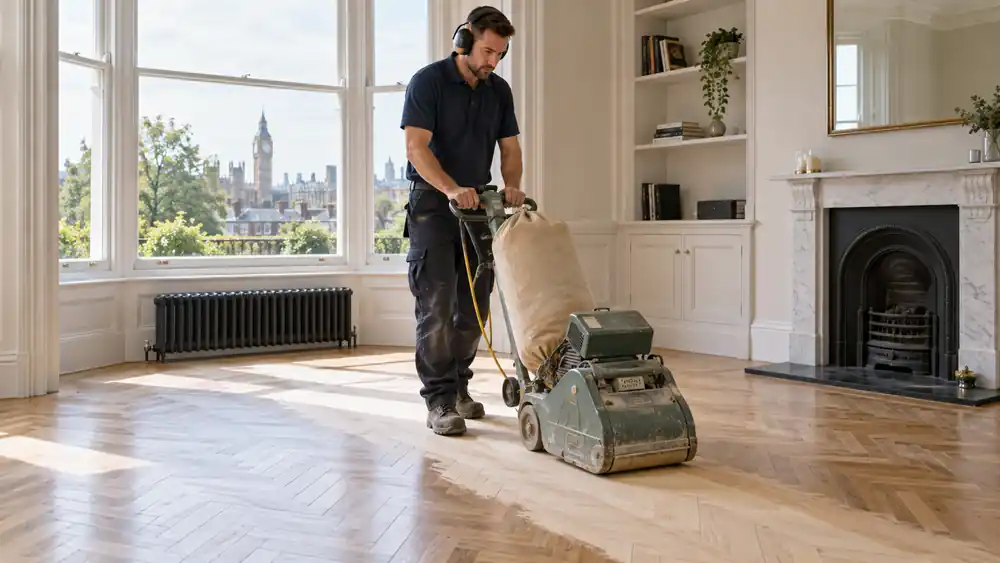
WHAT WE CAN HELP WITH
The scope is reviewed around the property, existing condition and the result you need.
Solid boards and many engineered floors can often be refreshed, but the wear layer, board stability and old coatings matter.
Furniture and fragile items need to be cleared so the floor can be approached consistently.
The floor is worked through a suitable sequence of abrasive grades instead of relying on one aggressive cut.
FLOOR SANDING LONDON
Solid boards and many engineered floors can often be refreshed, but the wear layer, board stability and old coatings matter. We inspect loose or damaged boards, proud nail heads, deep staining, historic repairs and movement before proposing work. Very thin veneers, active damp or extensively weakened timber may need a different remedy. This first check avoids removing material unnecessarily and helps set realistic expectations: sanding can soften many marks and level ordinary wear, but it cannot promise to erase every deep stain, gap or colour variation.
Furniture and fragile items need to be cleared so the floor can be approached consistently. We discuss access, adjoining rooms, thresholds, skirtings and any areas that should remain untouched. Exposed fixings are dealt with before abrasive work begins, and vulnerable surfaces are protected. Sanding creates fine dust even with extraction equipment, so containment and sensible ventilation form part of the plan. The aim is an orderly working area rather than a rushed pass around obstacles.
The floor is worked through a suitable sequence of abrasive grades instead of relying on one aggressive cut. Main areas, edges and corners require different tools and careful blending so the result does not show obvious transitions. Where gaps, splinters or isolated damaged boards are found, we explain which repairs are practical before finishing. Grain, age and previous treatment can cause natural tonal differences; retaining that character is often preferable to over-sanding sound boards.
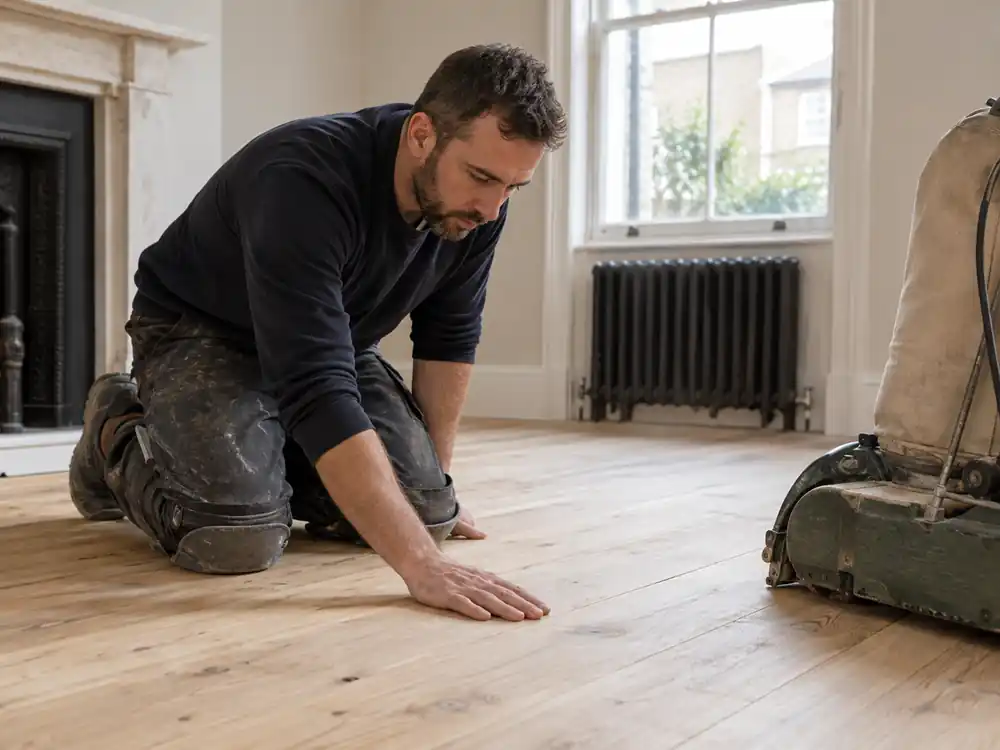
CAREFUL PROPERTY WORK
A finish should suit the timber, expected foot traffic and the look of the room. Options may include suitable oils, hardwax oils or water-based lacquer systems, subject to the floor and product instructions. Drying and cure times are not the same: a surface may feel dry before it is ready for rugs, furniture or heavy use. We provide product-specific aftercare guidance, including gentle cleaning, felt pads and prompt attention to spills.
State the approximate floor area, room use, timber type if known and whether carpet, grippers or furniture remain. Photographs of thresholds, fireplaces and the most worn boards help reveal edge work and repairs. We review that information before confirming the likely scope, while recognising that concealed conditions may only become clear on site. Please flag access limits, lease or landlord permissions and any deadline that genuinely affects the work. A clear brief helps separate the requested service from decorating, waste removal or specialist work that should be quoted independently.
A CLEAR PROCESS
Send the London postcode, photographs, measurements and the result you want.
The requirements, access, materials and appropriate trade are reviewed before work begins.
The planned work is carried out carefully, with any material change explained clearly.
FLOOR SANDING FAQ
Useful answers for planning the work.
No. Suitability depends on the timber, remaining wear layer, condition and previous work. We assess the floor first, especially engineered boards or heavily damaged areas.
It may reduce surface marks, but stains that have penetrated deeply can remain. We explain likely limitations before work starts rather than promising a uniform new-board appearance.
Extraction reduces airborne dust substantially, but no sanding process is entirely dust-free. We plan containment and recommend clearing vulnerable belongings from the room.
That depends on the chosen finish and manufacturer’s cure schedule. We give specific guidance; replacing furniture or rugs too early can mark or slow the curing surface.
Minor board and fixing issues can often be addressed as part of preparation. Extensive decay, damp or structural movement may require separate investigation before sanding.
ONE CLEAR NEXT STEP
Send photographs, the property location and a concise description of the floor sanding work. We will review the practical scope and explain what information is needed before an appointment can be confirmed.