HARROW WEALD · A HOUSEHOLD LIST THAT MAKES SENSE

Everyday Handyman Work in Harrow Weald

Small impacts can leave a trail around a busy home: a cupboard handle marks the wall, a door catches nearby furniture and a loose trim snags passing items. Bob’s reviews Harrow Weald repairs alongside sensible ordinary fitting changes that address the contact, not just its visible mark.

  • Contact between fittings and surfaces identified
  • Small damaged areas considered with their everyday use
  • Ordinary stops and accessories reviewed for suitability
  • Repairs kept distinct from structural movement
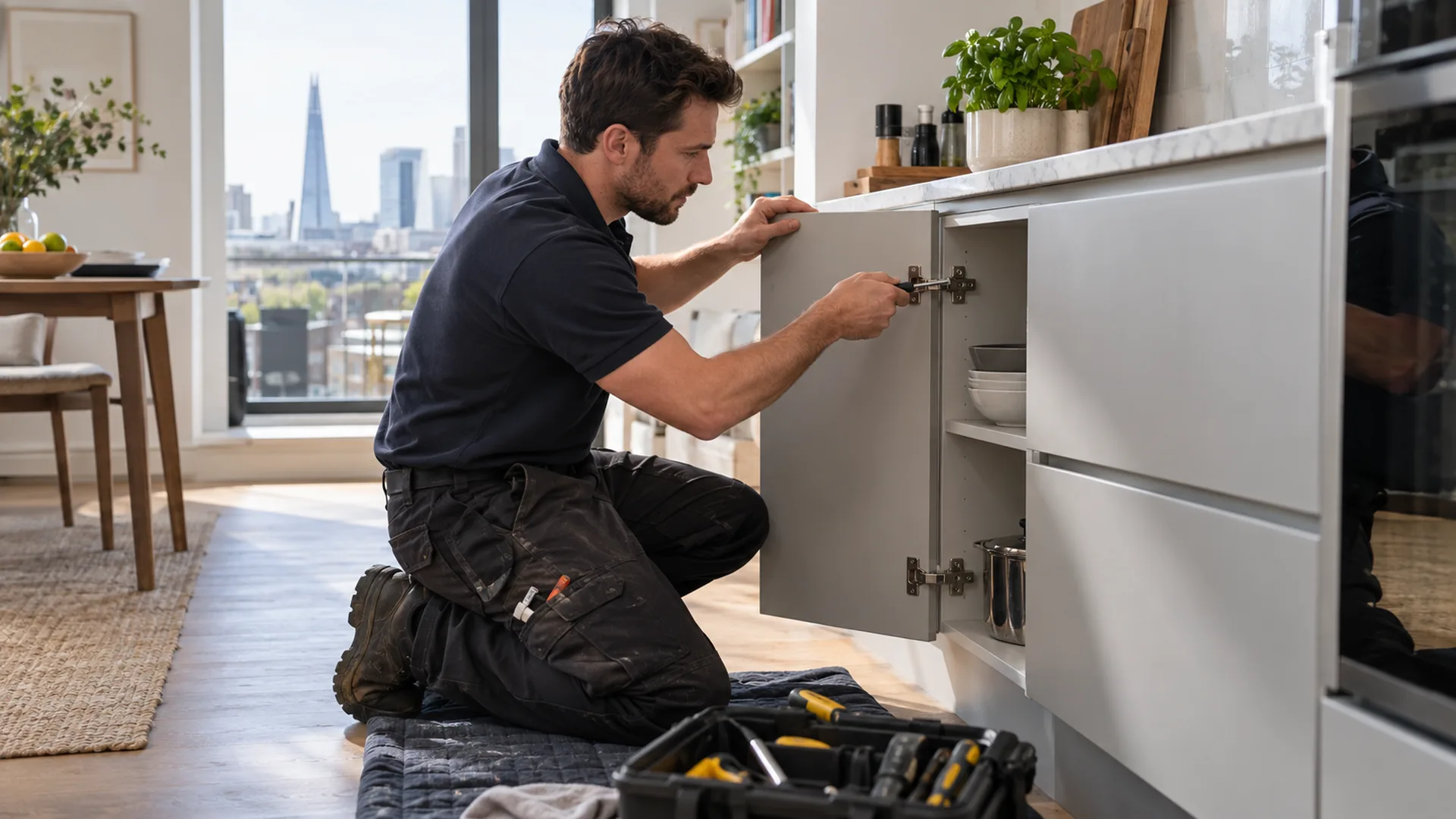
Handyman adjusting a kitchen cabinet fitting

Different rooms do not always need different projects

Harrow’s council material describes inter-war two-storey suburban buildings around the former Harrow Weald Park Estate, alongside the wider area’s varied character. Within a house, the kitchen, hallway and living rooms can have different generations of furniture and fittings. A newer handle or unit may now meet a surface that the earlier arrangement did not touch.

Look at the ordinary relationship between those items. A cupboard front may strike a neighbouring handle; a room door may mark the wall at its opening limit; a projecting trim can be caught as belongings pass. Describe the point of contact without forcing the movement or continuing to use a damaged item. The repair enquiry should include both the damaged area and the arrangement associated with it.

Bob’s can review appropriate minor repairs, household fittings and limited joinery. The aim is not to add protective pieces everywhere or restrict a door arbitrarily. Any proposed stop, buffer or adjustment must suit the component and preserve its intended function. Controlled doors, unexplained movement and structural concerns need their correct assessment rather than an improvised restriction.

Discuss your property requirementsCall 020 3137 9380

Record the contact and the damaged area

Choose doors or fittings for the moving item and wall damage for the surface it has marked. Describe the relationship in your enquiry so the list does not become two unrelated repairs.

1Property type
2Area of property
3What needs attention
4Urgency
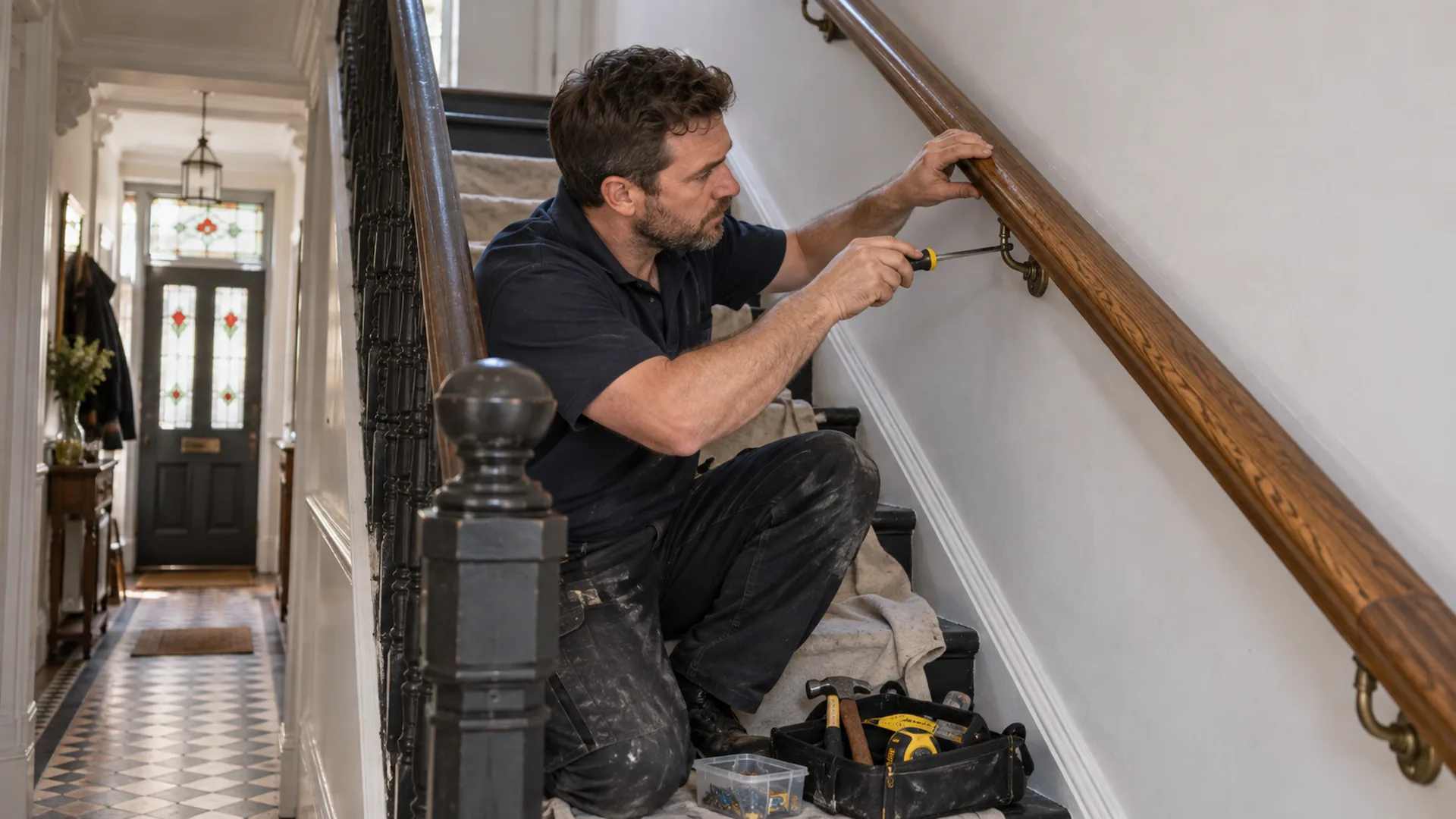
Professional checking a timber stair handrail

A protective fitting should not create a different obstruction

A stop or buffer may appear to be a small purchase, but its position affects how something opens and what remains accessible. Describe the contact to be prevented, then check the proposed arrangement against normal use. Restricting a door too far can make a cupboard difficult to reach or reduce the space available to move through a room.

The receiving surface matters too. A loose decorative strip is not automatically suitable for a fitting taking repeated contact. Nor should a product be attached to an uncertain floor or wall without considering concealed services and its intended installation. Bob’s can review an ordinary fitting request, but a safety-critical door or unexplained change in movement requires a different decision.

Repairing the existing mark is a related but separate task. A dent, broken edge and scuffed finish need different preparation. Agree how much making-good is included and what appearance is realistic after repair. If the source of contact remains unresolved, record that clearly rather than presenting fresh paint as a complete solution. A modest household visit is more useful when the fitting works as intended and the repaired surface is not immediately exposed to the same avoidable impact.

Harrow Weald questions about fittings and contact damage

Can a door stop solve every mark behind a door?

No. The contact, door function and proposed mounting position need review. A stop should not compromise necessary access or a controlled door’s operation. Explain the problem rather than prescribing a universal product.

Should the wall mark be painted before the fitting is reviewed?

It is useful to settle the contact issue first. Otherwise the repaired area may be marked again. Preparation and decoration can then be defined according to the actual damage and acceptable finish.

Can a buffer be attached to a loose piece of trim?

Do not assume that the trim can take repeated contact. Its condition and attachment need consideration. Repairing the trim and choosing a suitable position are separate decisions, even if both seem small.

Why include both cupboard fronts in the enquiry?

Their movement and projections may interact. A close view of one damaged handle can hide the other item causing the contact. Explain the ordinary opening arrangement without forcing damaged parts to demonstrate it.

Could a new stop make the doorway less useful?

Yes, if it restricts movement too far or creates an obstruction. The proposed arrangement needs to preserve the room’s normal use. A protective product should not simply move the inconvenience somewhere else.

What if the door has started moving differently without an obvious reason?

Do not assume a protective fitting is the answer. Explain the change and seek appropriate assessment. Unexplained movement or a safety-critical door concern should be kept separate from routine cosmetic making-good.

Trace the contact without forcing the item

01

Locate

Identify both the moving fitting and the surface it meets. An isolated photograph of a dent may not explain the ordinary movement associated with it.

02

Preserve

Keep the intended opening and access requirements in view. Preventing contact is not a good result if a necessary cupboard, control or route becomes difficult to use.

03

Review

Discuss a suitable ordinary adjustment or protective fitting. Its mounting surface and product requirements matter, and controlled doors should not receive improvised stops or restrictions.

04

Repair

Agree the treatment of the existing damage after the contact question is addressed. Distinguish a sound repair from the decorative finish expected around it.

Handyman areas near Harrow Weald

These neighbouring pages offer other local maintenance starting points.

Show where the unwanted contact happens

For your Harrow Weald request, identify the two items that meet and the access that must remain. Bob’s can review the ordinary repair and fitting options against that actual relationship.

Call 020 3137 9380Get a quote