
Retained items
Identify the furniture and fittings that will return to the room. Check their working condition before concentrating on the appearance of the walls around them.
GIDEA PARK · MAKE THE FITTINGS WORK BEFORE FINISHING THE ROOM
A freshly decorated room still feels unfinished if the cupboard catches or an ordinary fitting remains loose. Bob’s can review Gidea Park joinery, furniture and household fitting repairs before the finishing stage. Put working condition ahead of new paint so the same area does not need opening up twice.
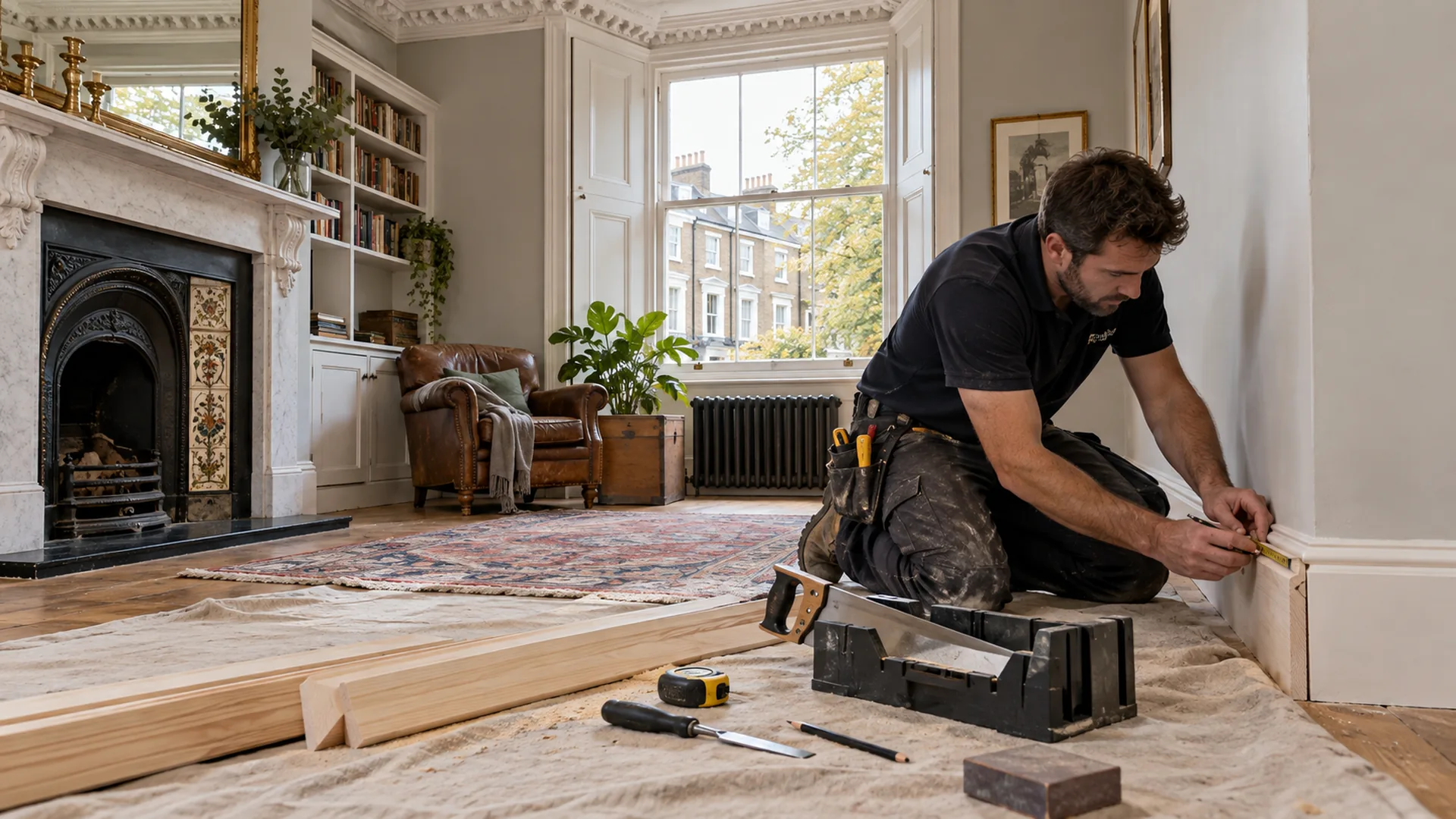
Havering’s Gidea Park Conservation Area appraisal identifies exhibition buildings and other buildings contributing to the area’s architectural interest. Where the property or feature has special status, establish the relevant requirements before alteration. That is separate from deciding which ordinary household items need attention before a room is redecorated.
Walk through the room in use, not just as a set of surfaces to paint. Open the cupboard, use the ordinary door handle and check the furniture that will return after decoration. A fitting fault can be overlooked when the main conversation is about colour. If it is discovered only after finishing, the repair may disturb work that has just been completed.
Give the decorating plan a short functional checklist. Mark a handle that must be lifted to latch, a drawer that rubs and any fitting temporarily removed for access. Ask who will return each item and check its operation. These are easy details to lose when a room is empty and attention has shifted to the finish; recording them now avoids discovering the same inconvenience after the contents are back.
Identify the furniture and fittings that will return to the room. Check their working condition before concentrating on the appearance of the walls around them.
Decide which ordinary faults belong in the handyman enquiry and which need specialist advice. A planned decorating date should not force an unsuitable repair decision.
Keep each removed fitting with its own components and agree who will return it. A decorating refresh should not end with unidentified screws or a handle fitted differently from its intended arrangement.
Try the everyday actions before all contents return. Identify a remaining mechanical fault separately from the appearance of the new finish, so it is not lost behind the completed decoration.
Choose the room and the actual faults, including joinery, furniture or wall concerns. The planner produces a useful checklist and service suggestions without storing personal details. It does not grant consent for protected work or set curing times for decorating products.

A room can look ready while its fittings still work badly. Before cushions, ornaments and stored contents return, try the ordinary actions that matter: closing a cupboard, pulling out a drawer and operating an internal handle. A newly visible problem should be described as a working fault, not covered by arranging furniture in front of it.
Decoration can also reveal an earlier inconvenience that the household had stopped noticing. A handle may be awkward to grip or a cabinet door may only close when another door is open. Explain the normal sequence of use. Bob’s can review ordinary mechanical fitting work; electrical controls, controlled doors and specialist equipment remain separate even when they sit within the same freshly finished room.
If fittings have been removed during the refresh, their return should be planned rather than improvised. Different screws can look similar, and an item placed back in the wrong orientation may no longer operate as intended. Keep components associated with their original item. Reinstatement must respect the relevant material and product instructions; a tidy row of fitted pieces is not proof that the room is ready for normal use.
It is useful to identify it early because repair or replacement may disturb the surrounding finish. The exact order depends on the work and materials. Include it in the enquiry rather than assuming the decorator will resolve a mechanical fitting fault.
Do not make that assumption. The building and particular feature need to be identified, and ordinary movable furniture is a different enquiry from altering significant fabric. Obtain appropriate advice where status or proposed work is uncertain.
Keep each item’s components together and identifiable, particularly where similar-looking screws have different purposes. Agree who is responsible for removal and reinstatement. Returning an item should preserve its intended operation, not depend on guessing from a loose collection of parts.
Yes, an ordinary furniture repair can be reviewed separately. Describe the defect and the condition of the surrounding material. Keeping it out of the room may help access, but does not guarantee the component is repairable.
Report the working fault rather than accepting it as part of the refresh. The fitting, alignment or surrounding condition may need review. Do not repeatedly force it or assume another coat of paint will help its operation.
Try the agreed ordinary fittings in their normal sequence and confirm what is complete. Keep any restrictions on newly treated surfaces in mind. It is easier to identify an unresolved drawer or handle fault before furniture and contents obscure the working area.
For work at another local property, these guides may be useful.
Household fittings and furniture enquiries nearby.
Practical repair visits around the adjoining corridor.
Send Bob’s the Gidea Park items that need to work better before the room is refreshed. Explain what will stay, what is being removed and the finishing work required. Keep any protected-feature questions distinct from ordinary household repairs.