ENFIELD LOCK · REPAIR THE PART, PROTECT THE REST

Selective Handyman Repairs for Enfield Lock Interiors

A small repair often sits beside a finish that should stay untouched. Tell Bob’s which trim, decoration or fitting must be retained and where the damage ends. An Enfield Lock enquiry can then focus on a defined repair instead of allowing one disturbed detail to become an unplanned room refresh.

  • Repair edges agreed before surrounding finishes are disturbed
  • Retained components kept identifiable during work
  • Making good distinguished from full redecoration
  • A task checker for the appropriate repair route
Professional reviewing the condition of a room
15+Years of experience
M25London coverage
ONEAccountable team

OLDER FABRIC ALONGSIDE LATER HOMES

Different interiors around the lock need different repair boundaries

Government Row’s cottage terraces and the reused factory buildings at Enfield Island Village give this part of Enfield more than one kind of maintenance setting. The council’s appraisal describes both retained historic details and residential, office and light-industrial reuse. A cottage trim repair and a new fitting in a converted interior should therefore start with the material being retained, not a standard replacement specification.

For an older cottage room, Bob’s can review a small patch, an ordinary loose cupboard fitting or a short damaged timber detail without treating every sound neighbouring surface as part of the job. Retained mouldings and textured finishes need particular attention at the edge of the repair. In a converted interior, a shelf or wall accessory also needs the actual lining and support understood; the appearance of the exterior does not tell you what is behind a later internal partition.

The riverside setting affects preparation too. Government Row sits between waterways, with paths forming part of the surrounding arrangement. Identify the usable entrance for your address and the route for carrying materials; do not treat a waterside path as an assumed unloading space. A modest repair can still involve a sheet, a long trim section or equipment that needs a clear approach.

If work would alter protected fabric or exterior details, check the applicable designation and approval before agreeing that element. The council provides the conservation appraisal and Article 4 documents. Ordinary freestanding furniture adjustments can be considered separately while a building-related decision remains unresolved.

Discuss your property requirementsCall 020 3137 9380
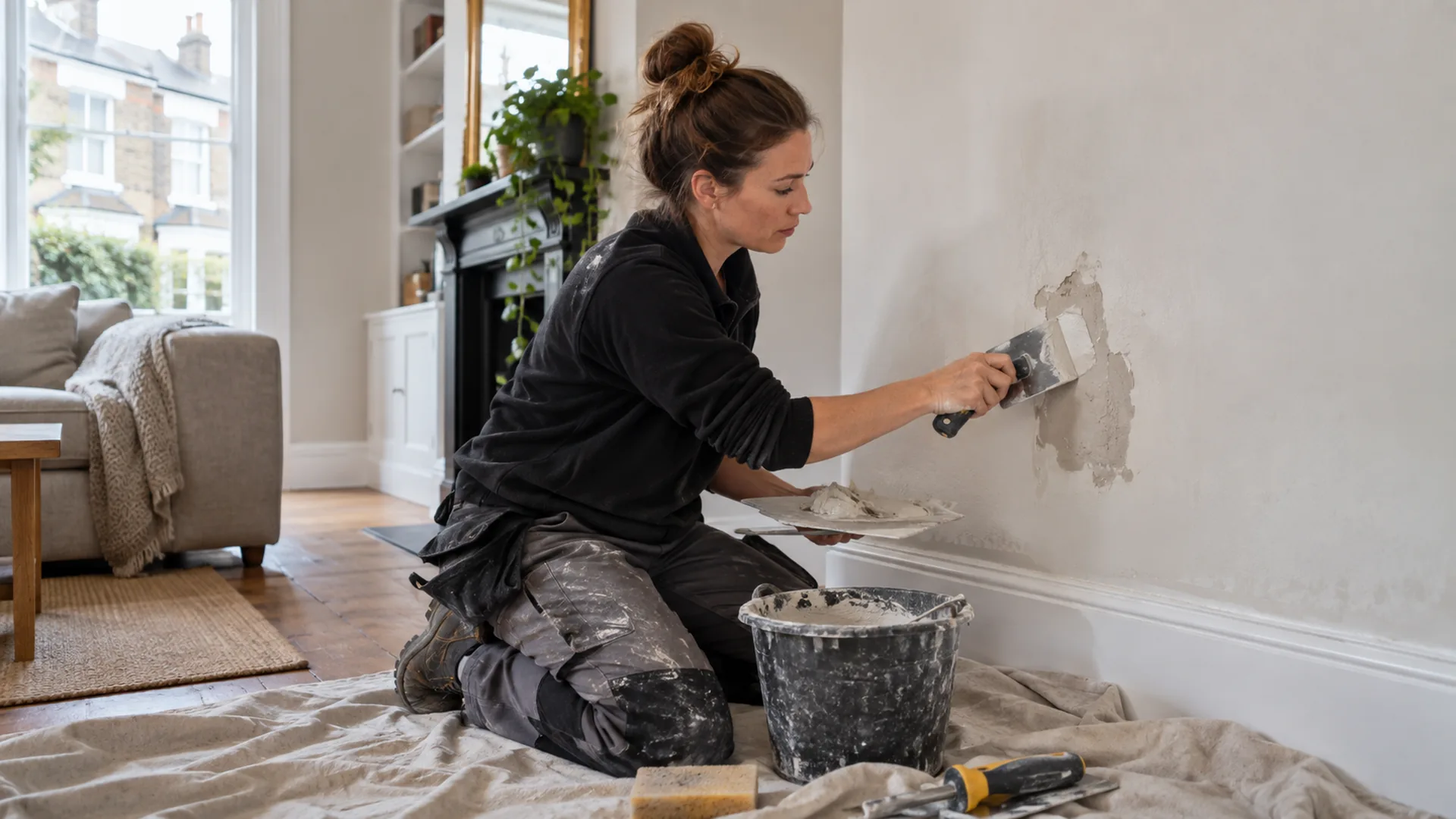
Handyman preparing a local repair on an interior wall

SAVE THE REFERENCE BEFORE REMOVAL

A repaired area should have an agreed stopping point

Mark the desired repair extent in a room photograph or written note rather than applying tape to a delicate finish without advice. State which adjacent surfaces must remain as they are. A neat repair may still require preparation beyond the visible damaged spot, and that should be discussed openly.

For paint, retain the product details if available and explain the age of the surrounding decoration. Touching up a small area may remain visible because of sheen or ageing. Decide if that is acceptable or if painting a complete bounded surface would be preferable. The quotation should reflect that decision rather than promising an invisible result by default.

During the work, keep removed fittings separate from waste until their future use is clear. If a matching part cannot be sourced, the options may include a different repair extent or a deliberate replacement decision. That is a change to approve, not a reason to alter surrounding sound work without discussion.

LIMIT DISTURBANCE DELIBERATELY

Three useful agreements before work starts

01

Describe the finish standard

Choose the expected result: secure repair, prepared surface or completed decoration. Include the visible boundary. A phrase such as make good can otherwise leave different assumptions about the amount of finishing.

02

Record retained pieces

Identify items to keep, including intact fittings that provide a matching reference. Make their location clear and avoid mixing them with discarded packaging or damaged parts.

03

Set a pause point

Agree who can decide if hidden damage extends beyond the planned patch. Stopping for a revised scope can be more sensible than continuing into a much larger surface without an approved finish plan.

QUESTIONS ABOUT LIMITED REPAIRS

Agree where the work should stop

Does making good include painting the entire wall?

Only if that is agreed. Preparation, a local touch-up and full-wall painting are different scopes. State the desired finish and the boundary so the quotation can reflect the actual result expected.

Can I keep the damaged trim as a pattern?

Keep a piece if it is already safely detached. Do not remove more material to obtain one. Photographs of the intact profile and adjacent joints may help establish a suitable repair or replacement specification.

What if a crack returns after previous filling?

Include that history before arranging another patch. Repeated cracking can indicate an unresolved cause and may require investigation. Cosmetic work should not be used to hide a condition that still needs assessment.

Can a small paint touch-up be invisible?

That cannot be guaranteed. Product, texture, sheen and ageing affect the result. Explain your expectations and discuss the area to decorate rather than assuming a colour name alone establishes a match.

Should old brackets be discarded once removed?

Keep them until the repair and any reuse decision are settled, unless they present a handling hazard. They may provide useful dimensions or a finish reference. Separate retained parts clearly from waste.

Does conservation status prevent interior maintenance?

The particular building, fabric and work determine the appropriate route. Identify protected features and obtain relevant advice where required. A general handyman checklist neither prohibits all maintenance nor grants permission for changes.

HOME MAINTENANCE PLANNER & HANDYMAN JOB CHECKER

Check a selective repair list

Choose the relevant room and concerns to distinguish ordinary maintenance from specialist assessment. The planner helps order the items but cannot judge an old coating or hidden substrate. Its selections stay in the browser and require no personal information.

1Property type
2Area of property
3What needs attention
4Urgency

NEARBY COVERAGE

Handyman areas near Enfield Lock

For another address in the surrounding area, use the appropriate local information when preparing that separate enquiry.

A DEFINED ENFIELD LOCK REPAIR

Show the damage and what should remain

Give Bob’s the repair boundary, retained details and preferred finish. Include previous attempts and any unresolved cause. Those choices make a selective maintenance request clearer than a broad instruction to refresh the room.

Call 020 3137 9380Get a quote