
Record the arrival state
List wet coats, muddy footwear, bicycle lights and sports bags that enter together.
A BETTER WET-KIT LANDING · CHINBROOK
Chinbrook Meadows brings walking, cycling and sports close to surrounding homes. An entrance works harder when damp coats, muddy shoes and equipment have a ventilated place to land without blocking the household route.
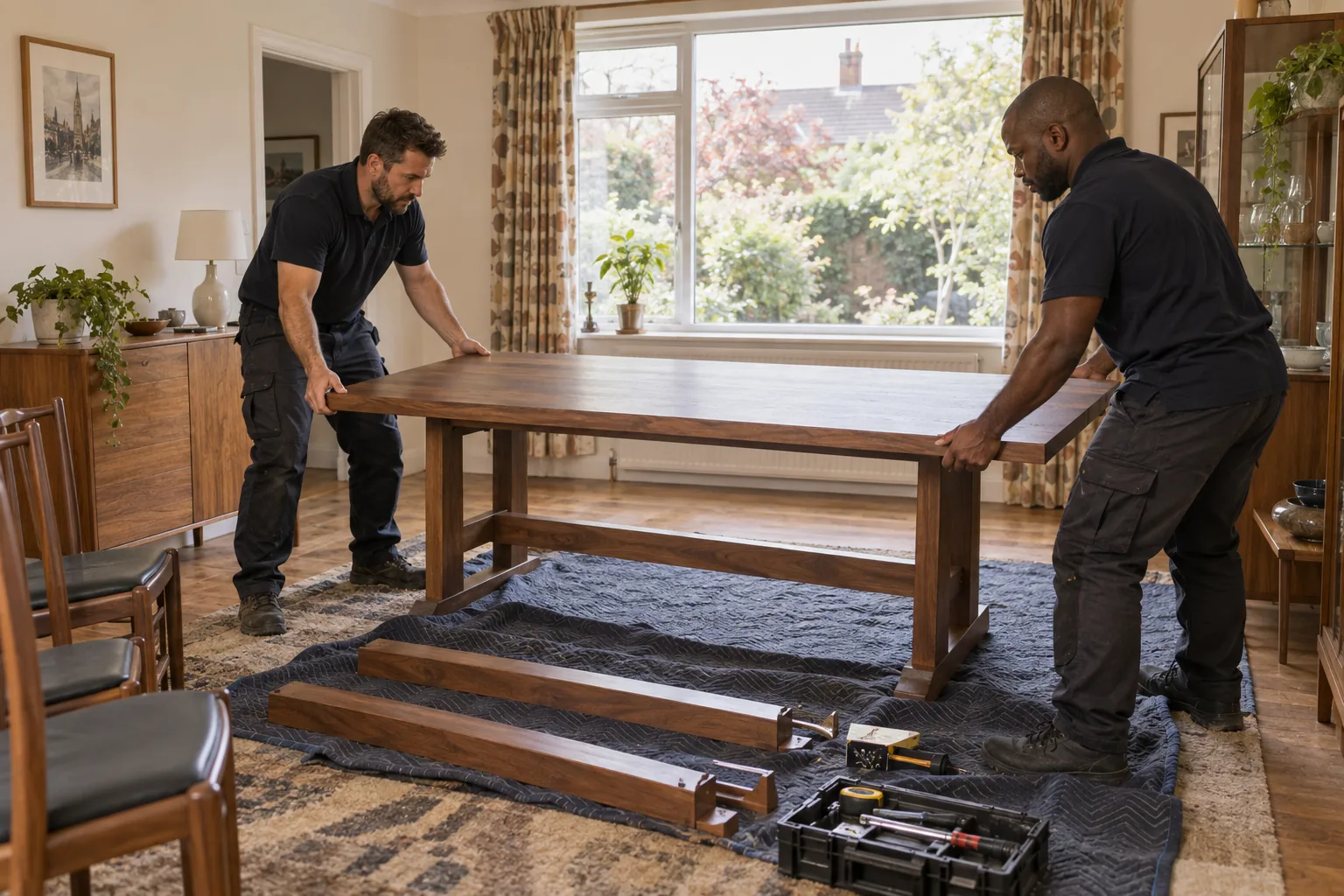
PARK-SIDE ACTIVITY REACHES THE HALLWAY
Lewisham describes Chinbrook Meadows near Grove Park as a park with the River Quaggy, a cycle route, sports areas, play space and an outdoor gym. The borough’s east-area planning material also treats the river and green infrastructure as important connections. The useful property lesson is not a claim about every resident; it is that outdoor equipment and wet clothing deserve a deliberate route in homes that use those amenities.
Photograph the entrance on a normal busy day. Mark the door swing, meter cupboards, radiator, sockets and the route to the stairs or kitchen. Count the coats and bags that genuinely need daily access. A shallow hook rail, a draining shoe tray and one wipe-clean shelf may outperform a large closed unit that traps moisture and steals circulation space.
FOLLOW THE DAMP ITEM
List wet coats, muddy footwear, bicycle lights and sports bags that enter together.
Keep damp items away from vulnerable finishes and allow air to circulate around them.
Add washable or replaceable protection where pedals, tyres or bags touch the wall.
Confirm trays, floors and the space beneath storage remain reachable for routine cleaning.
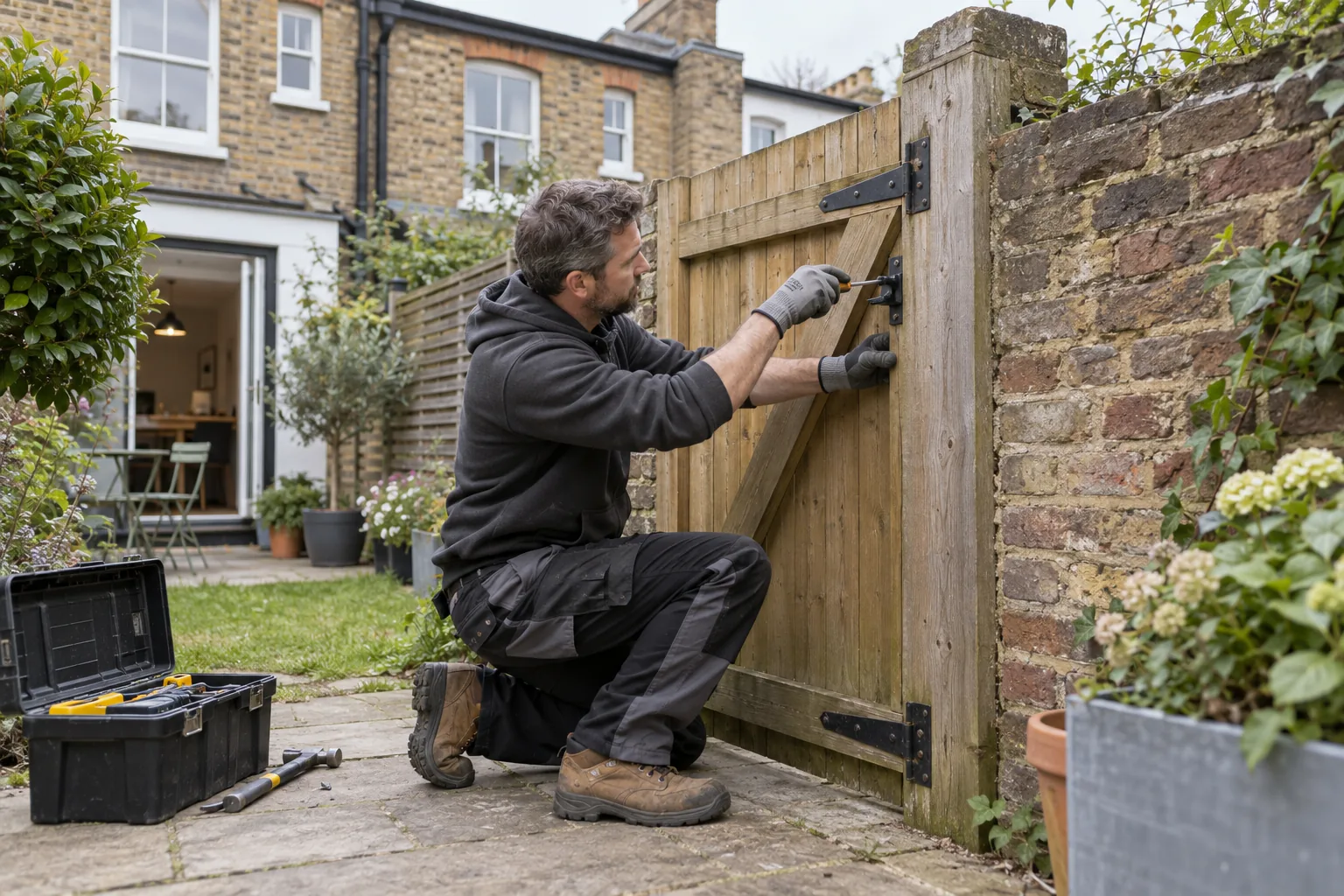
THE GATE STARTS THE CLEANING ROUTE
A dragging gate or loose latch can turn carrying a bicycle or sports bag into an awkward manoeuvre. Check hinge screws, post movement, latch alignment and clearance at the ground. Fresh scrape marks show where contact occurs, but repeated seasonal movement may point to swelling, poor drainage or failing timber rather than a simple latch adjustment.
Do not cover soft wood with a new fitting. Probe suspicious areas appropriately and agree whether repair remains sensible. After adjustment, operate the gate with the load normally carried through it and confirm that it does not swing into the public route. Record the hardware size so replacement does not start with another measuring visit.
BUILD AIRFLOW INTO THE BRIEF
A tidy photograph taken on installation day proves little. The arrangement should tolerate wet weather, rushed arrivals and easy weekly cleaning.
Leave circulation behind damp outerwear and avoid pressing fabric against wallpaper, untreated timber or a cold external wall.
Use a defined area that can be wiped without damaging skirting or adjacent paint. Keep trays removable rather than sealing dirt underneath.
Count heavy coats and loaded bags. Confirm the background and spacing instead of treating all hooks as decorative accessories.
Give lights, locks, gloves and keys a visible home near their related equipment so they do not accumulate on the floor.
Open the door fully and walk the route with bags in hand. Storage must not reduce safe movement or hide controls that need access.
COST THE AGREED COMPONENTS
Select a task, quantity and duration to see an indicative labour figure using Bob’s published weekday rates. Storage products, protective finishes, timber, gate hardware, parking and repair of hidden damage are considered separately.
RUN A DRIP-AND-DRY TRIAL
Use an old towel beneath the proposed hanging point and place one properly wet coat there after a walk. Look again after thirty minutes: water should not touch skirting, pool behind a shoe tray or run toward an internal threshold. Check the same position several hours later for trapped odour or a cold damp patch. This small trial reveals more than arranging dry belongings for a photograph.
Next, remove the tray and wipe the whole floor without shifting the fixed storage. If a brush or cloth cannot reach the corners, raise the lowest component or shorten it. A labelled mesh pouch can hold muddy gloves while allowing them to breathe; bicycle lights and locks need a separate dry container. Recurring staining, condensation or soft timber is a building-condition question, not an organising problem.
The towel trial shows the actual wet zone before the wall receives permanent fittings.
The mop, brush and hand can reach every edge beneath the chosen arrangement.
Lights, batteries and keys occupy a dry pocket instead of sharing a damp basket.
NEARBY COVERAGE
Measured household maintenance beside Chinbrook Meadows.
Prepared repairs and fittings to the north-west.
Practical handyman visits east of Chinbrook.
CHINBROOK ENTRANCE QUESTIONS
Only when the product provides adequate ventilation and can be cleaned easily. A removable open tray may be more practical for footwear that regularly arrives wet or muddy.
That depends on the rail, hook spacing, fixings and wall background. Count the heaviest likely daily load and keep that limit with the installation record.
Yes if the bicycle, handlebars, pedals and walking width are measured together. Protection should cover real contact points without introducing a new obstruction.
Misalignment can come from loose hinges, a moving post, ground contact, swelling or decay. The cause should be identified so the adjustment is not temporary.
Allow for setting out, confirming wall construction, assembly, fixing and a loaded operational test. Products, hardware and repair of weak surfaces are separate considerations.
Send the door fully open, the whole entrance wall, floor and skirting, nearby controls and the normal collection of coats or equipment. Add clear dimensions.
SHOW THE ARRIVAL AT ITS BUSIEST
Share the complete doorway and the items that arrive together, not an empty styled corner. Add wall dimensions, likely loads and any gate or door fault. Bob’s can review the fitting and repair tasks while keeping moisture, specialist work and hidden defects outside an unrealistic fixed scope.